Staging Memory | The Glass Menagerie at the O’Reilly
© Freddie Houlahan
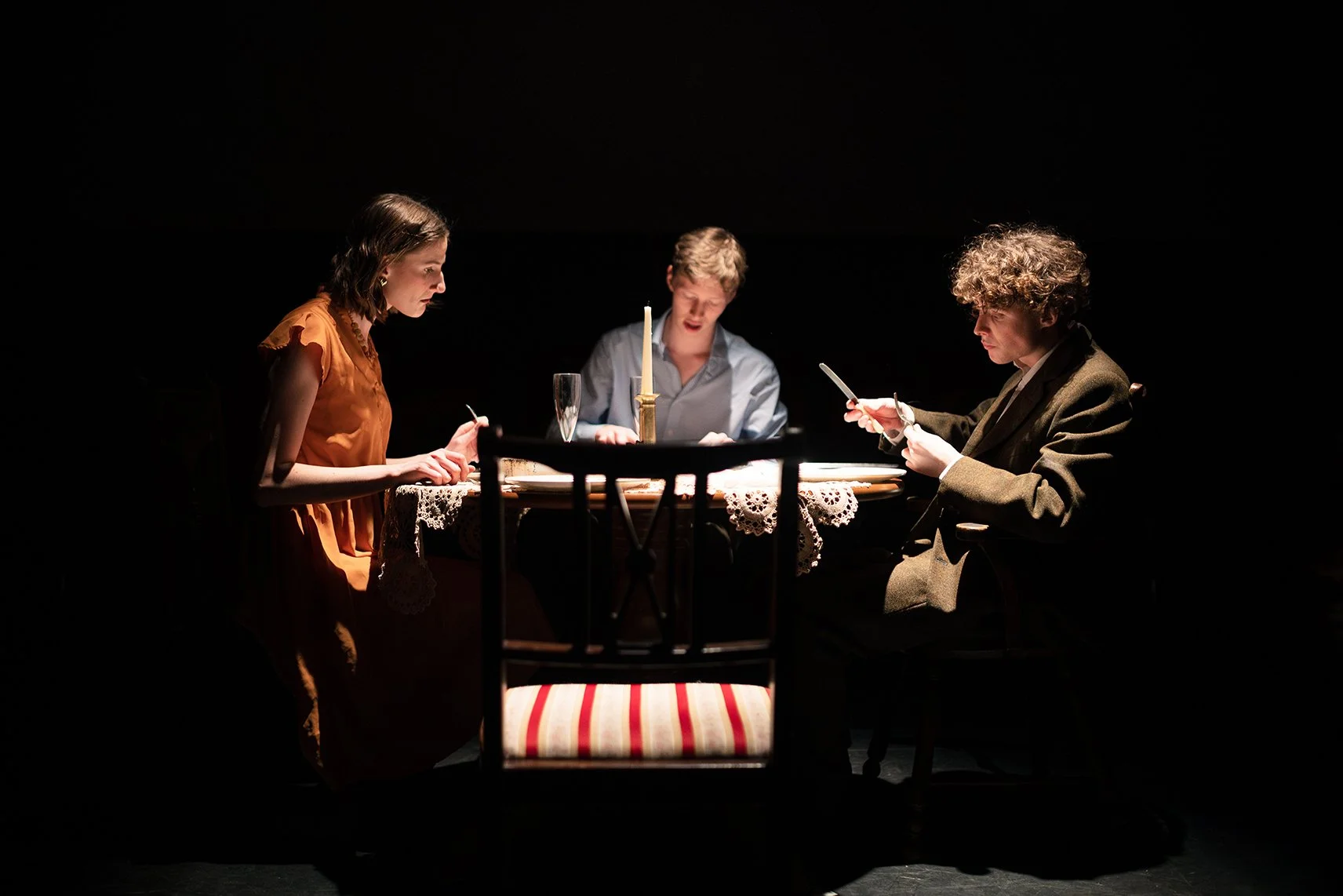
Magdalena Lacey-Hughes (2024 Theology and Religion) and George Robson (2024 Music) were the directors and producers of The Glass Menagerie, staged this term at the O’Reilly Theatre. We spoke to them about their experience, what drew them to Tennessee Williams’ play, and the production’s connection to Keble.
Could you give us a short plot teaser of The Glass Menagerie?
George Robson: The play is about the Wingfield family, especially Tom who is the narrator and main character. I think it’s about being caught between wanting to be at home and looking after your family and sort of honouring them, but also wanting to go out into the world and be your own person.
Magdalena Lacey-Hughes: There’s sort of these two states that we see Tom engage in because he’s narrating the play as a memory play, so there’s a lot of hope, there’s a lot of past, looking back on memories and kind of delving into that family dynamic.
Why this play?
GR: I think one of the reasons that we chose to do The Glass Menagerie is that it’s a great play in terms of allowing yourself to be creative and being able to input loads of ideas into it. Obviously, the text has a lot of stage directions, and it has a lot of visions and ideas within, but there’s definitely scope to add some crazy ideas too, whether that’s from the directors or the actors. It’s a really collaborative project.
Who were the different groups that this production was in collaboration with?
MLH: As two Keble students, it’s been great to put on a play at the O’Reilly, on site, in collaboration with the Martin Esslin Society who run the student theatre plays at the O’Reilly each term, and it was also in association with Keble Drama; we have around eight students involved just from Keble alone so it’s been wonderful having that community come together around the piece.
GR: Our production company, Crazy Child Productions, has been going since June and this is our second production, so that is also quite a Keble-based thing.
MLH: All of our media marketing is done by us, we have a great graphic designer and our filming is also done by us. It’s been really wonderful being able to engage friends and others, and make new friends through this experience.
In what capacities did Keble students participate, and how did that group come about?
MLH: About three quarters of our team are from Keble, a few of them came about at the beginning. We were all talking about it and they wanted to get involved as friends and then a few more have signed up through hearing about it through Keble and they’ve been involved with acting on stage. One of our actors is from Keble — and obviously George and I are both from Keble — and then we have people on the marketing team, people on the costume team and the set team, so a very broad range of engaging all those different skills.
What was it like directing and producing the play?
GR: It was a great experience. We were originally planning to put on the play a term earlier but then, because of complications with the venue, we ended up postponing it. We therefore had a very long time to put it together, which I think was most welcome, especially because in Oxford a lot of the shows tend to be two or three weeks of quickly trying to do everything. It’s nice to have the freedom to try things and see what works and what doesn’t work. The cast were really great and helpful in terms of, because the play was in the round, the difficulty in managing that from a directing and an acting point of view, so it was a really collaborative effort working out how we would put it in the space and how that would translate on stage.
MLH: And from a production point of view, it’s just meant we’ve been able to make decisions and have the flexibility to change them if they’re not working and, as we’re all students, we’re kind of learning as we go along so it’s been really useful to have that time to make those mistakes and correct them.