PHASER Magazine | Voicing Oxford’s Music Scene
We talked to Ariana Garcha (2024 History and Politics) and Solene Gadsby (2024 Chemistry) about their experiences directing student magazine PHASER, an Oxford Student Publications Limited (OSPL) publication focused on music and on rejuvenating Oxford’s student scene while reuniting it with the local one.
What drew you to become part of the directing team?
Solene Gadsby: PHASER had existed a few years earlier but had gone into hiatus when no one was able to take on the leadership roles. It was pushed to relaunch under OSPL, and I came on board as Creative Director, which played to my strengths. We both felt there was a clear gap in the student journalism scene, and it was partly a response to the common wisdom that Oxford’s music scene was stale or lacking, which I’ve never agreed with. During that first term, though, I felt frustrated that we hadn’t fully carved out the niche we’d envisioned, so I applied to become Editor-in-Chief for Michaelmas 2025. I wanted to make defining that identity my first priority, and I felt that stepping into the role would give me the freedom to guide the magazine in the direction we’d originally imagined. I stepped back to Creative Director in Hilary 2026 and felt very confident in allowing Ari to take the lead, since we had worked so closely on the project during Michaelmas.
Ariana Garcha: I'm really passionate about Oxford's student journalism scene. First and foremost, I just love writing and the written word as a form for conveying messages or emotion, so getting involved felt inevitable, because I think it's so important to have avenues for people to publish their writing. PHASER in particular appeals for its niche and specific focus. Music is such a prominent part of my life, and the lives of so many others, that it feels like an endless avenue for discussion and debate. I was really lucky to inherit the Editor-in-Chief role from Solene – she did a lot of work making the magazine feel fully-formed rather than a project inchoate, and from there I could work on improving what we already had, rather than really having to invent methods for the magazine to occupy its own space in Oxford.
How does PHASER set itself apart from other student publications and what are you most proud of achieving during your time as Editor-in-Chief?
AG: PHASER is special for its niche, its determined focus on one facet of our lives. There's so much to explore relating to music, and there's a real appetite for more discussion about it, which is exactly what we aim to provide. I think it also sets itself apart for a genuine engagement with the city beyond university limits, with very intentional choices in who we interview and the releases or gigs we review. That's definitely what I'm proudest of from my time at PHASER's helm; the magazine itself is such a complete product which I think addresses a lot of interesting discussions about music.
SG: As Ari said, what really sets PHASER apart is the strong niche it’s carved out in music and nightlife. Where other student magazines have a much broader brief, accepting submissions across a wide range of themes and media, we try to bring a form of traditional music journalism into the Oxford student sphere, which is why we focus on reviews and interviews with leading figures in the local music scene, ones that reflect the student experience of engaging with the city’s music culture. During my time as Editor-in-Chief, I felt most proud of initiating those conversations and building collaborations with organisations that were slightly removed from the student sphere, some of which have long been cornerstones of Oxford’s alternative music scene.
PHASER has a rather distinct style. How would you describe its visual identity and in what ways have you both shaped its creative direction?
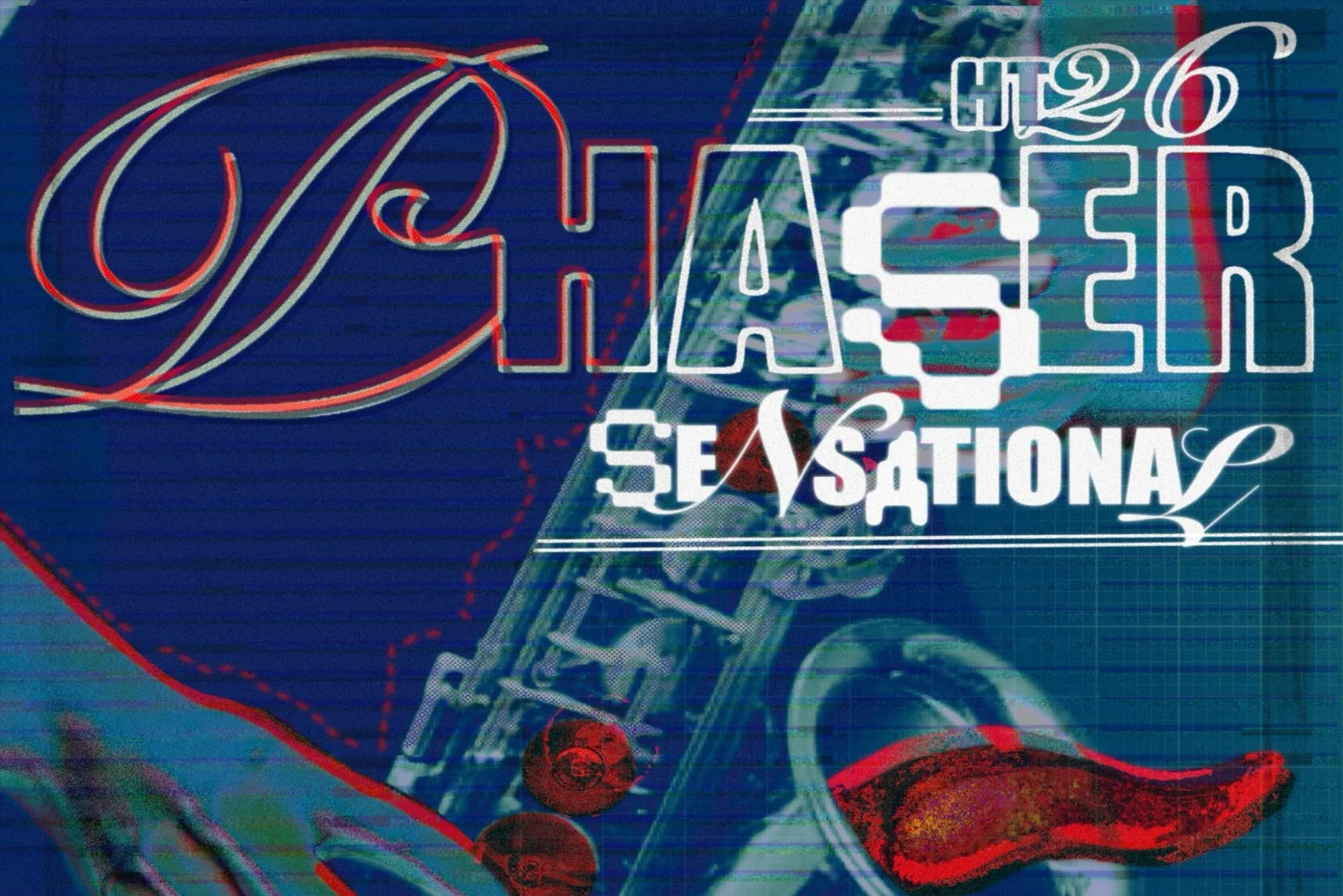
SG: PHASER definitely has a distinct visual identity, and that’s something we developed quite intentionally. I’d describe it as bold and slightly DIY, drawing heavily on the visual language of 90s rave and gig posters; it reflects the energy and immediacy of live music and nightlife. Both as Creative Director and as Editor-in-Chief, I played a central role in shaping that look. I designed the logo and established a consistent set of fonts, colours and graphic motifs that carried across print, social media and event promotion. As Editor-in-Chief, I made sure that visual style aligned with our editorial direction. The theme I selected, Get Loud, anchored the magazine firmly in music and nightlife, and the design language reinforced that focus.
AG: I didn't come into PHASER with any background in graphics, so I've definitely had much less influence over the creative direction than Solene, hence her being my Creative Director! I definitely input my own vision when I began to learn how graphics work and, especially, produce my own, but also in deciding on the theme for my term's issue, Sensations. Our overall visual identity is bright and colourful, and mostly just very self-aware that it's incredibly cool. We won't put out something boring to look at, but as well as being visually interesting there's a certain emphasis on how we can explore our theme in a way that remains faithful to the bold and eye-catching graphics we're known for.
What have you been most excited to work on recently?
AG: It's not the most recent, but this term I worked on an online-exclusive article which really excited me. It's about Bad Bunny, specifically his Super Bowl half-time show, but also addressing his recent award-winning album more generally, and an exploration of the political context of his music and performance. It encapsulated a lot of my interests, both in the music I choose to listen to and my degree in Politics, so I was super thrilled to be able to explore the two together in a creative and relevant manner. Of course, I have to shout out the overall magazine, though. It's a testament to so much hard work from so many people, but still reads as cohesive and insightful.
SG: Most recently, I’ve been excited by the purely creative side of the magazine. Stepping back from the Editor-in-Chief role last term gave me the space to focus almost entirely on design, particularly experimenting with new layouts and pushing the visual language further than I had before. The collaborative events were something I was especially proud of during Michaelmas when I was Editor-in-Chief, but more recently the excitement has come from refining the magazine’s visual identity in a hands-on way. It’s felt like a return to the part of the work that first appealed to me: sitting with a blank spread and figuring out how to make it come to life.