The Power of Platelets | Jeanne Inchauspé
A new Oxford-led study published in Science, co-authored by Keble student Jeanne Inchauspé (2021 DPhil Interdisciplinary Biosciences), has made a breakthrough discovery about platelets, with important implications for the future of cancer detection and pre-natal screening. Known best for their role in clotting, platelet cells are now understood to also play a crucial part in decontaminating our blood, despite having no nucleus and being the smallest cell type in our bloodstream.
Researchers began with the simple question: could blood platelets be carrying hidden information picked up as they circulate through the bloodstream? Their investigations showed that platelets internalise DNA fragments from dying cells, a process that likely serves a protective role and can also be harnessed to identify evidence of other cells present in the body. The study identified foetal DNA within the platelets of pregnant mothers and mutated DNA absorbed by platelets from patients diagnosed with cancer. Mutated DNA was even discovered in the platelets of those with pre-cancerous conditions, indicating a promising potential for early cancer detection and prevention.
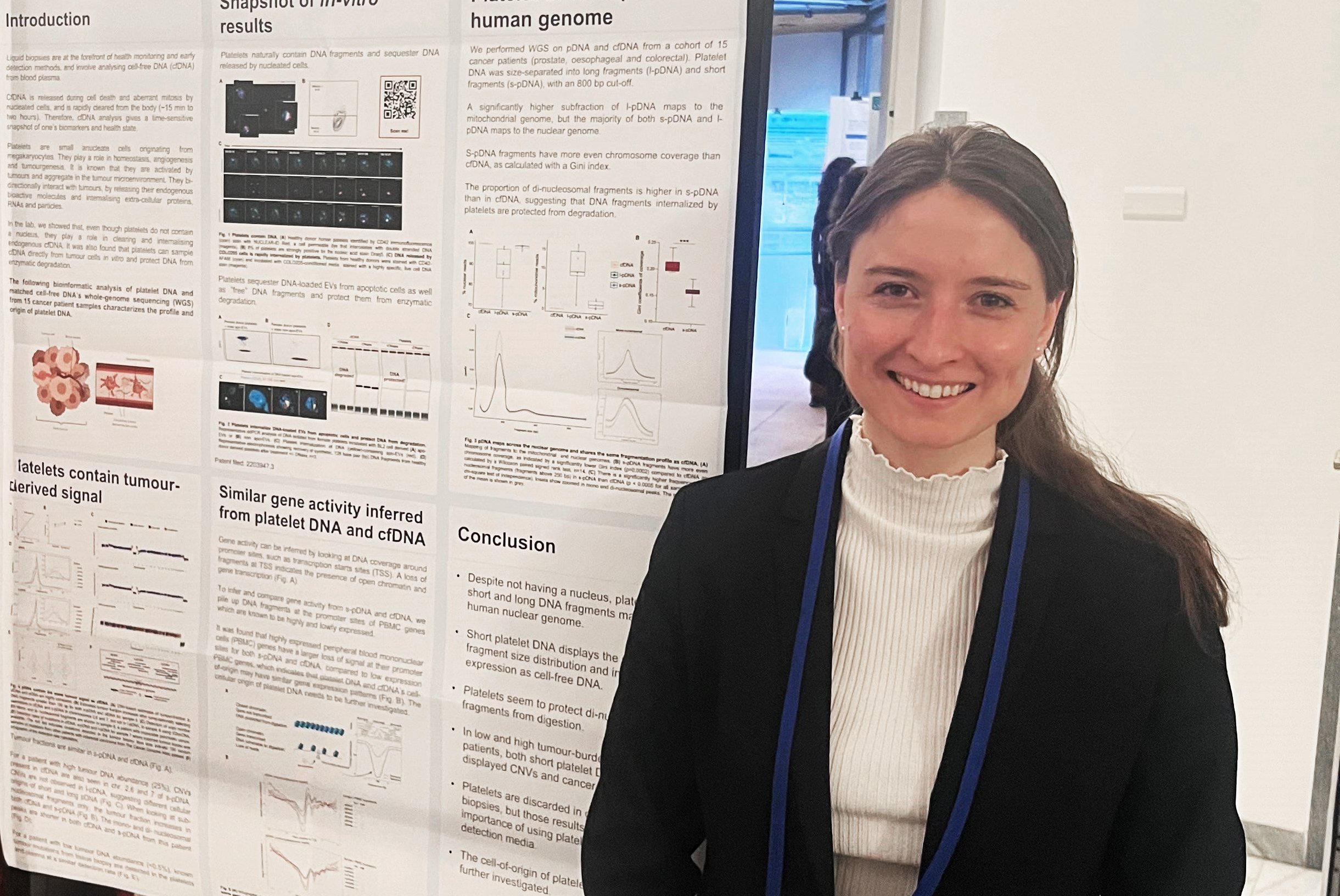
Fourth-year DPhil student Jeanne led the multiomics DNA-sequencing analysis, examining the DNA-sequencing data that form the foundation of the study. With support from a Keble Association grant, she presented the work at the Early Detection of Cancer Conference in Portland in 2022 and at the European Association for Cancer Research meeting on Cancer Genomics, Multiomics and Computational Biology in Bergamo in 2024.