En Garde for Bronze | Phoebe Cheung
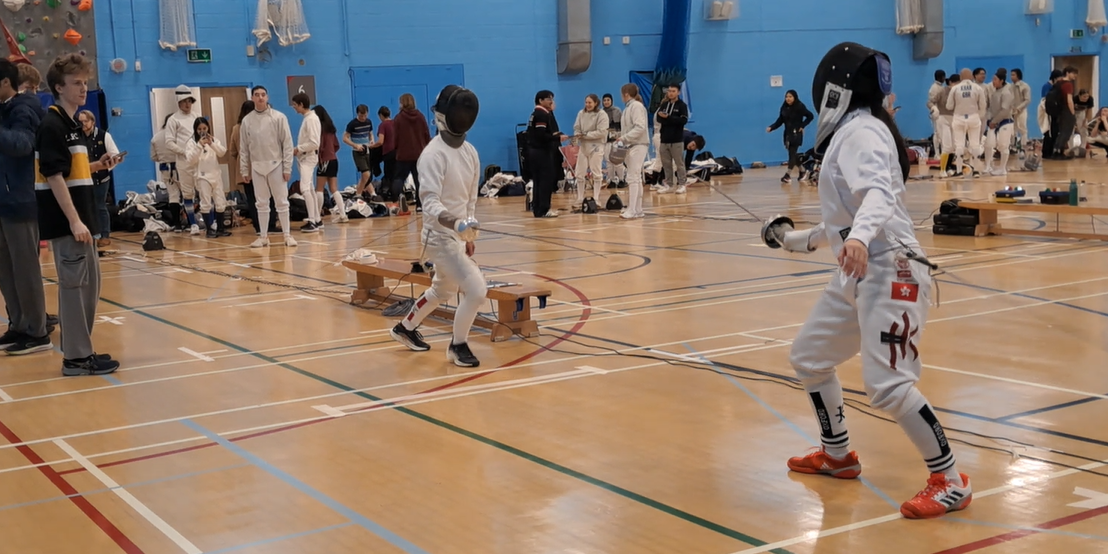
We interviewed Phoebe Cheung (2024 DPhil Engineering Science) who was awarded bronze in the Women's Épée category at the 2025 Warwick National Novices Fencing Competition, held this November.
Tell us a little about your fencing journey. How long have you been fencing, and what first drew you to the sport?
I have been fencing since my first term at Oxford (October 2024). I was drawn to the Oxford University Fencing Club (OUFC) booth at Freshers' Fair and wanted to give fencing a go. At the taster session, we had the opportunity to watch experienced fencers, learn basic footwork, and suit up in fencing gear to learn simple bladework. The coach and the club were all very welcoming, and after hearing about their beginners course, I decided to sign up for it!
You competed in the Women's Épée and Foil categories in Warwick at the end of November. For readers who may be unfamiliar, how do the fencing disciplines differ from one another?
There are three disciplines of fencing — Épée, Foil and Sabre. They differ by the target area, scoring method and scoring rules.
Épée: whole body target, score with the blade tip, no priority (right-of-way) rules
Foil: torso target, score with the blade tip, has priority rules
Sabre: waist-up (including arms and head) target, score with the whole blade, has priority rules.
How did you find the experience of competing for the first time?
The Warwick National Novices Fencing Competition was the first time I participated in a large-scale individual event from poules (round-robin) to direct elimination (DE) rounds. Poules were familiar to me, as I have participated in them for OUFC team tryouts. They are bouts (matches) to five points against each person in the poule (a small group of approximately six fencers), and poule performance determines seeding for DE. In the DE rounds, bouts are to 15 points, which is longer than I am used to during practice. It was a test of endurance, but a longer bout also allowed me to better understand my opponent's strategies. I felt very supported by my fellow Oxford teammates as they cheered me on! Overall, this competition allowed me to feel more comfortable fencing in a competitive setting, using skills I learned from training and footwork sessions in the past year.
What do you enjoy most about fencing?
I really enjoy the technicality of fencing. Before learning how to fence, I did not realise there were priority rules in some disciplines. I also enjoyed learning the different techniques for attacking and defending with just the blade. It's a sport that requires thinking on the spot. I would come in with a strategy, but if my opponent makes a move, I need to be able to adapt quickly to the situation.
What would you say to beginners interested in joining OU Fencing?
Fencing is a sport where every beginner truly starts from scratch. After learning how to move on your feet in a position that one doesn't normally move in, you learn how to control a blade to hit on target and defend an incoming attack. The beginners course at OUFC is a fun, safe, and welcoming environment for anyone to learn the fundamentals of fencing. On top of that, it is probably one of the most affordable ways to learn how to fence!